The quiet hour
These hours before dawn, difficult as they are to arrange, are in themselves the best part of any wildlife watching session. This is because staying in one place long enough for the landscape to reveal itself to your ears is itself the most valuable part of your time.
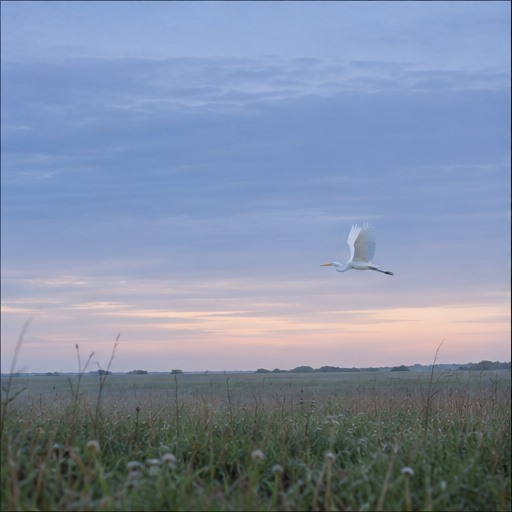
For many the early hours of pre-sunrise are the hardest part of wildlife watching. It can seem to be so quiet and one wants to be off and walking by now. But, as with most things, with time one becomes accustomed to the darkness and can even begin to place some of the sounds around one. Compare your notes from weeks past to your current notes taken from the same spot. You will be able to place sounds in space so much better now.
Solve the "I stayed, but missed it" problem
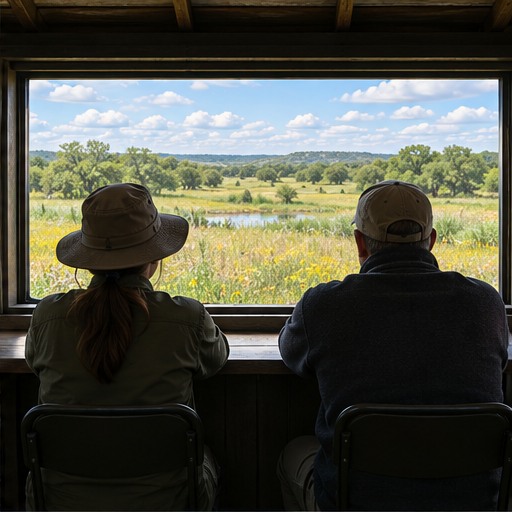
Select a location before light is lost and travel to it before it gets light enough to go for a walk. A bench, a sheltered window or even a dry patch of ground near a viewing area could be ideal. It is best to select a location to sit quietly to watch wildlife and then leave without causing a disturbance, rather than traversing sensitive ground, blocking a path or cutting through dense undergrowth to get to and from a distant point.
It's worth remembering that staying still for long periods of time in the pre-dawn hours is not easy, and it's worth not making the job of sitting still too hard. Hence, don't choose a seat which means that every time you put down your binoculars you have to get up to search for your drink. Keep your notebook and pencil in the same pocket every time you go out for a walk. Use a flashlight briefly to read your notes in cold weather and then shine it down to the ground to save your eyes.
For a 'viewing area' marked out by a fence, a dry patch of ground within the fence line would be ideal. For reed beds, a bench within the reed bed would be a good spot to view from. Ideally one would choose a position with consideration to other people (human and animal) and then move as little as possible to find a seat to sit on.
Set the position before the light changes
Take a look for loose branches, slippery or unstable ground and any puddles of water during the day before you go to watch at dawn. When you arrive select a seat that you can easily reach for your first sit and then try and stay there for the rest of your time at the spot.
Binoculars are best used to take very occasional look to see if anything has turned up whilst you are not looking. A fence post, a reed bed, a house roof or even a tree can make excellent reference points for birds in very poor light. Take note of their distance and describe their relationship to your chosen reference point(s).
When choosing a location for watching wildlife, the weather will be a deciding factor. A light breeze may be acceptable when sitting on an open bench, but an exposed patch of ground is not as comfortable as a sheltered area. A sheltered window may be dry and offer protection from movement but reflections off the glass and restricted viewing angle may make notes difficult to read. Leave immediately if watching from your proposed location becomes unsafe.
Let listening lead the optics
Start with the sound you can place first. Don't try to determine whether it is a bird or not, or whether it is a mammal or reptile, etc., just list the information you can glean from the sound in relation to where you are. So the first item might read: Single sharp call comes from left of the fence post in front of you. Then you hear faint rustling in the grass as the silence between the calls is filled by more movement. So your field notes would read: Single call, left of fence post; faint grass movement during the quiet; wind from the open side.
Then list out and note the silence between sounds. How long did it last? Has it changed since your last observation? What background noise can you hear and has it changed? This information can actually give you more information about what is going on than the sounds themselves. Outside of hunting this is a great way to monitor a large area without having to move.
An example of a silent observation to record: single sharp call from a distance to left of the fence post in front of you. Sound of faint rustling in the grass of the area between the calls to the left. Sound of wind in open area to right. Field notes would read: Single call, left of fence post; faint grass movement during the quiet; wind from the open side. These notes are useful to be able to refer back to other instances of similar sightings, to be able to compare and contrast them.
Wait a few seconds to allow your eyes to fully take in the view, then have a look through your binoculars to get a better view of what you have seen. If after a minute or so you haven't seen anything of interest, return to listening for more sounds to add to your field notes.
When a shelter is worth using
A hunting blind (fiberglass blinds) can be a very comfortable dry seat to observe wildlife for long periods of time. However these are generally set up in remote locations and would require special permission to use for the day. Also a blind is typically set up to give a hunter a view and therefore could block your view and collect condensation on the inside of the fabric. Also any small movement inside the blind could scare away the wildlife that you are trying to observe.
Inspect out the entrance, floor, seat, and all viewing holes before you go into the blind for wildlife observation. Loose panels, slippery floors, poor seats, and viewing holes that are obstructed mean that there are better places to sit and observe wildlife. Keep all of your gear in good order within the blind so that you won't have to get up to look for something that has fallen behind you. Try to leave a hunting blind in as good of shape as you found it. Do not use a blind for wildlife observation at times when others would be inconvenienced by your presence.
There is a trade-off between the comfort of the observer's shelter and the area which can be covered by his hearing from outside his shelter. For short, pre-sunrise periods of good weather a blind might be better but for calm, longer periods of observation an open bench in the exposed position would be better.
Write down the gap and come back
Note three points of special interest that you would have overlooked had you gone for a walk and tried to cover the same ground instead. Transcribe these in short hand that you can read back weeks or even months later. "Water behind reeds" is so much better than "a bird, white, bell crowned lynx w/renegdes". Where was that when you first heard it? Was the ground dry? How was the wind? Note down all that. "White bell crowned lynx w/renegdes" is far better than "some sort of bird".
Although you may have been to walk the area instead of sitting for quiet observation to record three things you would have missed, list them out and then write them down. 'Water behind reeds' is far better than 'white bell crowned lynx w renegdes' for notes. Write down where you first heard the sound, was the ground dry, how was the wind etc. Were you sitting on a seat or in the blind. Notes are for reference weeks or even months later so avoid writing too elaborate of field notes.
Returning to the same spot the following week would be meritorious should it be permitted. The change in wind would be noted, as well as the location of birds' departure sounds seemingly to have moved. Also, whether any species were absent from their normal time and place. All of these points would have been grasped had one sat quietly for an hour or so watching wildlife, as opposed to having been distracted by the busyness of walking about.
Keep reading
All stories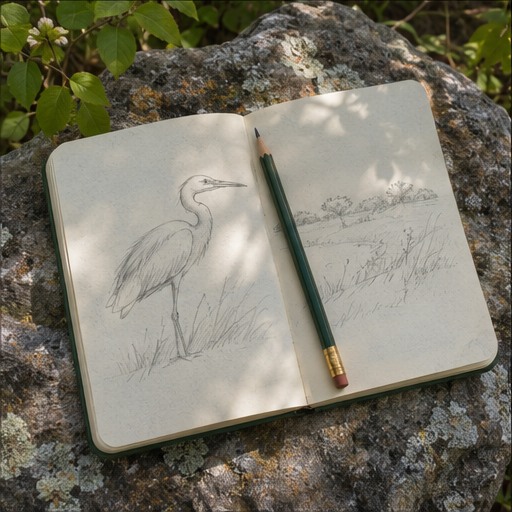
A field notebook on one page
A Simple Structure - Space for Sketches & Questions and for recording the Weather.
Read more